Guide to Political Parties in Brazil: Registration, Financing, and Functioning
Understand the rules that define the creation, maintenance, and internal management of Brazilian parties
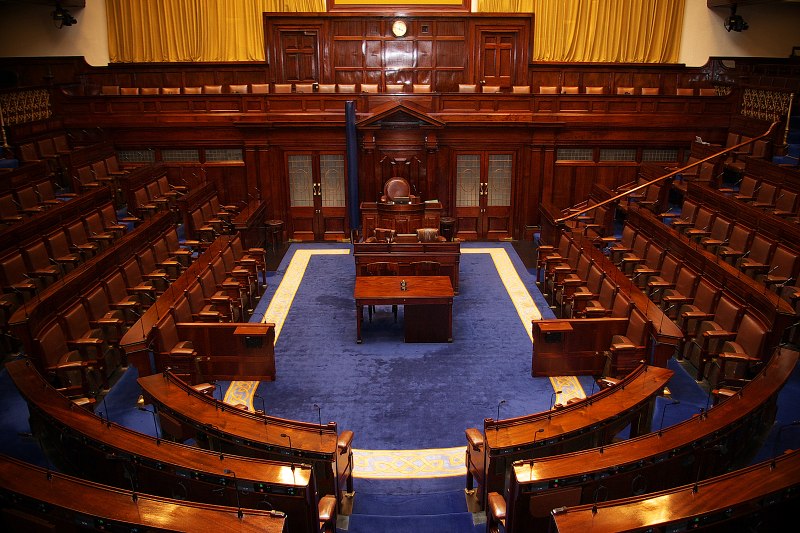
In Brazil, the existence of political parties is conditioned by strict rules that define who can create a party, how it can raise resources, and how its members make decisions. These norms, established in the Constitution, the Law of Parties (Law No. 9.096/1995), and the internal regulations of the Superior Electoral Court (TSE), are the foundation of representative democracy and directly influence the life of the electorate.
Since redemocratization, the country has undergone cycles of creation and extinction of parties, reflecting changes in the political landscape and legal requirements. Understanding the registration process, funding sources, and organizational structure of parties is essential for those who follow the political arena or intend to participate in it.
Party Registration
The registration of a political party in Brazil begins with the presentation of a political program, visual identity, and a statute that respects constitutional principles. The request must be filed with the TSE, which requires proof of minimum affiliation of 0.5% of the national electorate, distributed in at least one-third of the states, with a minimum presence in each of them.
To meet this criterion, organizers need to gather signatures from voters, which are electronically validated. After documentary analysis, the TSE publishes an opinion and, if approved, grants definitive registration, allowing the party to run in elections. If the number of affiliates falls below the limit established by law, the party may be extinct.
Financing: Public and Private Resources
Parties can sustain themselves through two main sources: resources from the Party Fund and private fundraising. The Party Fund, created in the 1990s, distributes resources according to parliamentary representation and voting obtained in the last general elections, guaranteeing a minimum base of funding for all parties that comply with the law.
In addition to the fund, there is the possibility of receiving donations from individuals, limited to up to 10% of the donor's gross annual income, and from legal entities, which have been prohibited from contributing since 1999. Donations must be declared to the TSE, which makes information available on a transparency portal, allowing citizens to track the origin of resources.
Parties can also raise funds through events, sales of campaign materials, and associations with foundations, as long as they do not exceed legal limits. Legislation requires detailed accounting, which is analyzed by the Electoral Justice and can generate sanctions in case of irregularities.
During the electoral period, the Superior Electoral Court sets spending ceilings for each party, calculated based on fundraising and the number of candidates. The objective is to avoid competitiveness distortions and ensure that the dispute is based on proposals, not financial capacity.
Internal Functioning: Statutes, Directorates, and Conventions
The statute of each party defines its organizational structure, the competencies of the governing bodies, and the rules for decision-making. In general, the hierarchy includes: national directorate, state directorates, municipal directorates, and the base of affiliates, which form the root of the party.
- National Directorate: the highest body, responsible for coordinating national strategy, approving alliances, and representing the party before the TSE.
- State Directorate: adapts the national agenda to the regional context, chooses candidates for state positions, and manages local resources.
- Municipal Directorate: articulates the party's presence in municipalities, organizes local campaigns, and cares for affiliation.
- Conference or Convention: an assembly of delegates that decides on candidate selection, programmatic guidelines, and eventual statutory reforms.
Conventions, held annually or in electoral cycles, follow regimental procedures that guarantee the participation of affiliates from different regions. The vote can be direct, by delegation, or through voting on a single list, according to the approved statute. This dynamic seeks to balance the necessary centralization for party cohesion with the representation of the bases.
Parties are required to create internal control bodies, such as the ethics committee and financial audit, whose functions are to oversee the adequacy of expenses, the regularity of donations, and compliance with internal norms. Non-compliance can result in suspension of resources or exclusion from registration.
Challenges and Perspectives
Despite the normative structure, practice presents challenges. The requirement of minimum affiliation has been criticized for favoring party fragmentation, while preventing the consolidation of new parties. Public financing, although ensuring resources, depends on electoral performance, which can generate dependence on short-term strategies.
Transparency in accounts still faces gaps, especially regarding electoral campaign resources and the movement of support funds. Civil society has pressed for reforms that increase the traceability of donations and strengthen internal control mechanisms in parties.
Conclusion
Understanding how a political party is born, financed, and organized is fundamental to evaluating the democratic health of the country. The rules of registration, the financing model, and the internal structure shape the capacity for representation and responsibility before the electorate. The debate on legislative adjustments should consider both the need for institutional stability and openness to new voices, ensuring that the party system continues to reflect the plurality of Brazilian society.