How Citizen Participation Transforms Public Management in Brazil
Social control and popular oversight are fundamental to ensuring transparency and efficiency in public services.
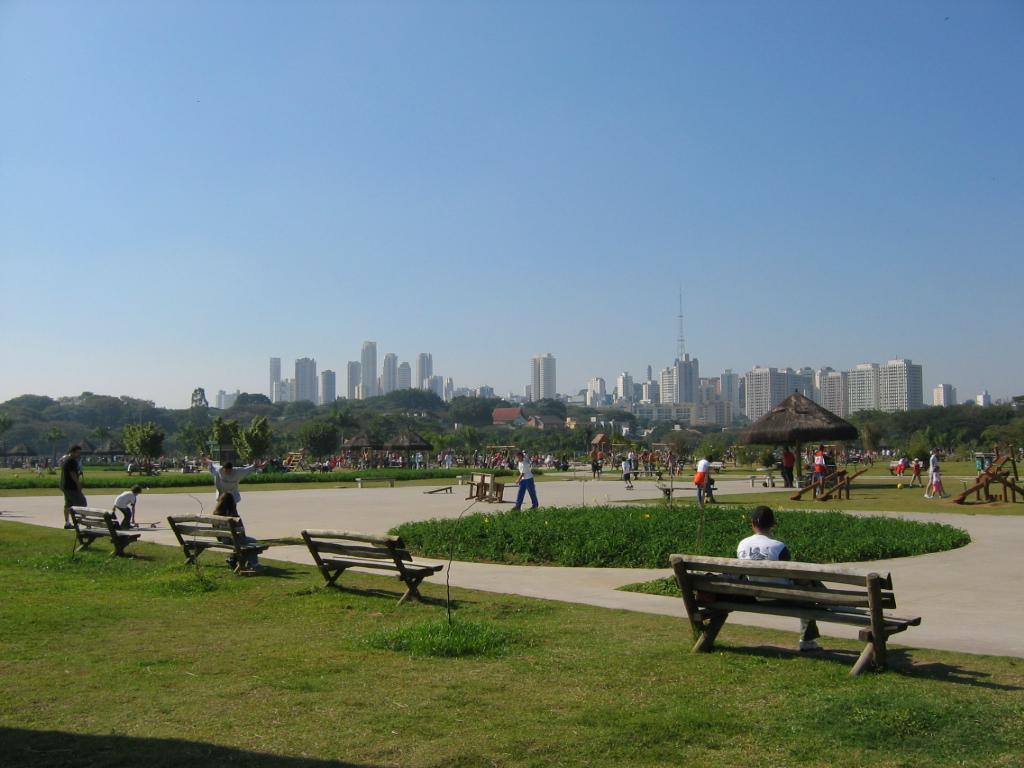
The construction of a democratic and efficient society requires that citizen action goes far beyond periodic attendance at the polls to choose political representatives. The true maturation of public institutions occurs when the population takes an active role in oversight, planning, and execution of policies that affect their daily lives. In the Brazilian scenario, this interaction between civil society and public administration is an indispensable element to ensure that collective resources are applied with transparency and focused on the real needs of the community.
The evolution of the citizen's role in national public administration
Historically, the model of public administration in Brazil carried strong traits of centralization and patrimonialism, legacies of a period in which state decisions were made from top to bottom, with little or no consultation with the population. During most of the 20th century, the management of resources and the formulation of policies were seen as exclusive attributes of a technical bureaucracy and political elites, leaving citizens with a predominantly passive attitude. This scenario began to undergo a profound transformation with the process of redemocratization that culminated in the promulgation of the 1988 Constitution.
The so-called Citizen's Charter not only restored basic political rights but also institutionalized the concept of popular sovereignty through mechanisms of direct participation. From this milestone, civil society came to be recognized as a legitimate and necessary actor in the cycle of public policies, which includes everything from problem diagnosis to result evaluation. The transition from a purely representative model to a model that combines representation and direct participation represented a paradigm shift, establishing that the legitimacy of public power depends on continuous social control.
Social control, understood as the ability of society to influence and oversee state actions, consolidated itself as a pillar for overcoming historical practices of clientelism and misappropriation of public funds. By opening the doors of administration to citizen scrutiny, an attempt was made to create a more dynamic system of checks and balances, where transparency ceases to be a concession of the ruler and becomes an inalienable right of the governed. This historical evolution demonstrates that popular participation is not a political concession, but a structural requirement for the stability and efficiency of Brazilian democratic institutions.
The instruments of social control and their operation in daily life
To ensure that social participation does not remain restricted to the field of theoretical intentions, the Brazilian institutional structure developed various formal channels that facilitate dialogue between the citizen and the State. Among these mechanisms, public policy councils play a central role. Present at the municipal, state, and federal levels, these bodies operate in essential areas such as health, education, social assistance, and children's rights. They function as debate spaces where representatives of the public power and civil society organizations meet to define guidelines, monitor program execution, and oversee the application of specific resources, ensuring that local demands are considered in governmental decisions.
Another relevant instrument is participatory budgeting, which allows the population to directly decide on the allocation of portions of public funds, especially at the municipal level. This process occurs through rounds of neighborhood assemblies and regional plenaries, where residents debate the needs of their communities, elect priorities such as sanitation, paving, or construction of leisure areas, and choose delegates to monitor the technical feasibility and execution of the works. Participatory budgeting democratizes the financial decision-making process, bringing technical planning closer to the real needs of the population.
Public hearings and public consultations represent participation mechanisms aimed at discussing projects of significant local or national impact. They are mandatory in processes such as environmental licensing of major infrastructure works, the elaboration of urban master plans, and the concession of public services. In these spaces, the public administration presents technical studies, and citizens have the opportunity to question the data, propose alternatives, and formally register their concerns. Although they often have an advisory character, public hearings generate a public record that constrains managers to technically justify their choices, increasing political accountability.
Finally, transparency portals and digital platforms for accessing information have revolutionized citizen oversight in recent decades. The transition from passive transparency, which required physical and bureaucratic requests, to active transparency, where the State makes detailed data on revenues, expenses, contracts, and bids available on the internet, allowed any citizen with access to the network to act as a social auditor. These digital tools reduce the information asymmetry and provide the necessary raw material for collectives and individual citizens to confront official discourse with real data on budget execution.
The practical impacts of popular oversight on the quality of services
The active presence of the community in public management generates concrete results that directly affect the population's quality of life. When citizens use social control channels, the likelihood of resource diversion and waste of public money decreases significantly. For example, the action of local councils that monitor school meals allows verifying if the food delivered to schools corresponds to what was contracted, if the quality is adequate, and if the expiration dates are being respected. This proximity oversight prevents fraud from going unnoticed by traditional external control bodies, which often perform audits only by sampling or after contract completion.
Beyond the prevention of irregularities, citizen participation ensures a more rational and fair allocation of public resources. In municipalities where the population is heard before the preparation of budgetary pieces, the occurrence of unnecessary or inadequate works to local reality, such as sports facilities built in areas without demand or health posts without available professionals, is reduced. The collective intelligence of residents, who experience the daily problems of their neighborhoods, provides public managers with a much more accurate diagnosis than any abstract statistical model elaborated in distant offices.
Another relevant practical impact is the development of civic and administrative competencies among participants. Regular involvement in councils, public hearings, and assemblies requires the citizen to learn to read technical documents, understand financial reports, comprehend the functioning of budget laws, and argue based on concrete data. This process of collective learning raises the level of public debate, transforming diffuse indignation into viable proposals and grounded demands. Over time, civil society becomes more mature and capable of dialoguing on an equal footing with the State's technical body, sustainably strengthening public governance.
The structural barriers that limit social participation
Despite the existence of a robust institutional framework for participation, Brazil still faces severe challenges to make these mechanisms fully inclusive and effective. One of the main barriers is the technical complexity and excessively bureaucratic language adopted by public administration. Reports on budget execution, bidding notices, and development plans are often written in legal and economic jargon incomprehensible to most of the population. This lack of clarity creates an invisible barrier that distances the ordinary citizen, restricting participation to small groups of specialists or representatives of organized interests.
Another critical obstacle resides in the profound socioeconomic inequality that characterizes the country. Active participation in municipal councils, public hearings, or community assemblies demands time, resources for transportation, and often flexibility in schedules that informal or low-income workers simply do not possess. As a consequence, it is frequently observed that these spaces are captured by local elites or well-structured pressure groups, which use participation channels to channel public resources and investments to their own areas of interest, deepening inequalities instead of reducing them.
There is also a generalized feeling of political inefficacy that fuels citizen apathy. When public consultations and councils are perceived as mere bureaucratic formalities, whose decisions and recommendations are systematically ignored by public managers, the population loses the stimulus to engage. The lack of clear feedback from public administration on how citizens' contributions were used or why they were rejected reinforces the perception that participation is only a democratic simulation, which empties the spaces of dialogue and undermines trust in institutions.
Finally, digital exclusion emerges as a contemporary challenge of great relevance. As public management migrates its transparency, consultation, and ombudsman channels to the virtual environment, the portion of the population that does not have quality access to the internet or lacks basic digital literacy ends up being marginalized from the social control process. Without active inclusion policies and without maintaining alternative physical channels, the technological modernization of the State risks creating a new form of political exclusion, limiting the exercise of digital citizenship to the most educated and higher-income strata.
Strategies to expand and democratize civic engagement
To overcome the obstacles that limit popular participation and build a truly democratic public management, it is fundamental to adopt a series of structured measures of inclusion and simplification. The first of these consists in the systematic adoption of simple language guidelines by public bodies. Information on budgets, contracts, and services must be translated into accessible visual formats, such as infographics, explanatory videos, and executive summaries that can be easily understood by people with different levels of education. Transparency only becomes real when the information made available is comprehensible and useful to the citizen.
Furthermore, it is essential to strengthen civic education from basic school formation, preparing new generations to understand the functioning of the State, the importance of taxes, the destination of public resources, and the role of oversight bodies. Schools and universities can act as nuclei for fostering active citizenship, promoting simulations of public hearings, workshops on expense monitoring, and extension projects aimed at providing technical support to neighborhood associations. This investment in the formation of a participation culture is the safest path to guarantee the renewal and perpetuity of social control spaces.
Another indispensable strategy is the valorization and technical support of civil society organizations and community-based collectives. These entities play a role of translation and mediation, helping to organize the demands of the most vulnerable communities, training local residents, and providing the necessary technical support for them to participate in public hearings and councils in a qualified manner. Partnerships between public power, universities, and the third sector can create support networks that reduce the inequality of conditions in public debates, ensuring that the voices of the periphery have the same weight as those of the central areas.
Finally, public administration must guarantee that participation has real and visible consequences in governmental decisions. This requires the establishment of mandatory feedback mechanisms, where the public manager is obliged to publish detailed reports demonstrating which proposals from the population were accepted, how they will be implemented, and, in cases of rejection, present clear and grounded technical justifications. When the citizen perceives that their contribution generated a concrete result in improving their neighborhood or the quality of local health services, a virtuous cycle of trust and engagement is created that strengthens democracy and elevates the efficiency of all Brazilian public management.